Point Injection Therapy (PIT): An Integrative Approach to Restoring the Bodies Ability to Self Heal

Updated: Jun 16
Many people live with chronic pain, pelvic symptoms, hormonal shifts, or stress-related issues that don’t fully resolve. Often, it’s not that “nothing is wrong.” It’s that key contributors are commonly overlooked in standard care.

Frequently missed sources of persistent symptoms include:
Myofascial trigger points
Scar tissue + chronically guarded tissue
Irritated superficial or peripheral nerves
Pelvic + autonomic nerve pathways
Nervous system dysregulation following injury, illness, or stress
Point Injection Therapy (PIT) is an integrative treatment designed to address these overlooked contributors by working directly with the nervous system, connective tissue, circulation, and acupuncture pathways, rather than masking symptoms.
What Is Point Injection Therapy (PIT)?
The modern understanding of trigger points comes largely from the work of Janet Travell-MD, who demonstrated that tight, irritated muscle fibers can refer pain far beyond the original tissue, often mimicking nerve, joint, or even organ pain.

Point Injection Therapy uses small, precisely placed injections into targeted points that may include:
Acupuncture points
Myofascial trigger points
Around superficial sensory nerves
Pelvic and perineal nerve pathways
Areas of chronic tension, inflammation, or scarring
PIT blends principles from trigger point injections, neural therapy, perineural therapy, and Traditional Chinese Medicine (TCM) to help reset pain patterns, calm overactive nerves, and restore healthy blood flow and communication in the body.
Substances Used in PIT — Regenerative & Supportive Solutions
The solutions used in PIT are carefully selected based on individual presentation and therapeutic goals.
These may include:
Procaine (short-acting local anesthetic)
Sterile saline
Dextrose solutions
Sterile, preservative-free injectable vitamins, including methyl B12
Procaine
Procaine is often used because it is:
Short acting and temporary
Supportive of local vasodilation (increasing blood flow)
Metabolized relatively quickly into para-aminobenzoic acid (PABA)
Generally well tolerated
It is not used simply to numb pain, but to help reset dysfunctional nerve signaling and improve circulation.
Saline & Dextrose
Saline may be used to gently stimulate local tissue repair and improve hydration of fascial layers.
Low-concentration dextrose can support nerve calming and tissue signaling pathways, encouraging regenerative responses within irritated nerves and connective tissue.
Methyl B12 (Methylcobalamin)
Methyl B12 is a bioactive form of vitamin B12 used in regenerative and nerve-supportive therapies.
It plays a role in:
Nerve repair and myelin support
Methylation pathways
Tissue regeneration
When used in localized injection therapy, methyl B12 may help support nerve health and recovery in chronically irritated or compressed tissues. It is especially relevant in cases involving neuropathic pain patterns, pelvic nerve irritation, and chronic nerve sensitization.
All injectable substances used in PIT are sterile and selected within scope of practice, to support safety and therapeutic precision. Unlike steroid injections, PIT does not rely on powerful anti-inflammatory drugs to suppress symptoms. Instead, the substances used are intended to gently stimulate the body’s healing response, improve microcirculation, and calm dysfunctional nerve activity.
Your provider will determine the most appropriate solution based on your health history, presentation, and treatment goals.
Trigger Points: A Major but Often Missed Source of Pain
The modern understanding of trigger points comes largely from the work of Janet Travell-MD, who demonstrated that tight, irritated muscle fibers can refer pain far beyond the original tissue, often mimicking nerve, joint, or even organ pain.

Trigger points commonly contribute to:
Frozen shoulder
Chronic neck and back pain
Whiplash-associated disorders
Sciatic pain
Migraines and tension headaches
Because trigger points do not appear on MRI or X-ray, they are frequently overlooked — especially after injuries where imaging is “normal” but pain persists.
PIT expands traditional trigger point injections by also addressing the nerves supplying the muscle, surrounding fascia, circulation, and nervous system regulation, rather than treating the muscle in isolation.
Pelvic Nerves & Pelvic Dysfunction
When the pudendal nerve gets irritated from sitting, cycling, muscle tension, or inflammation - it can contribute to persistent pelvic symptoms.
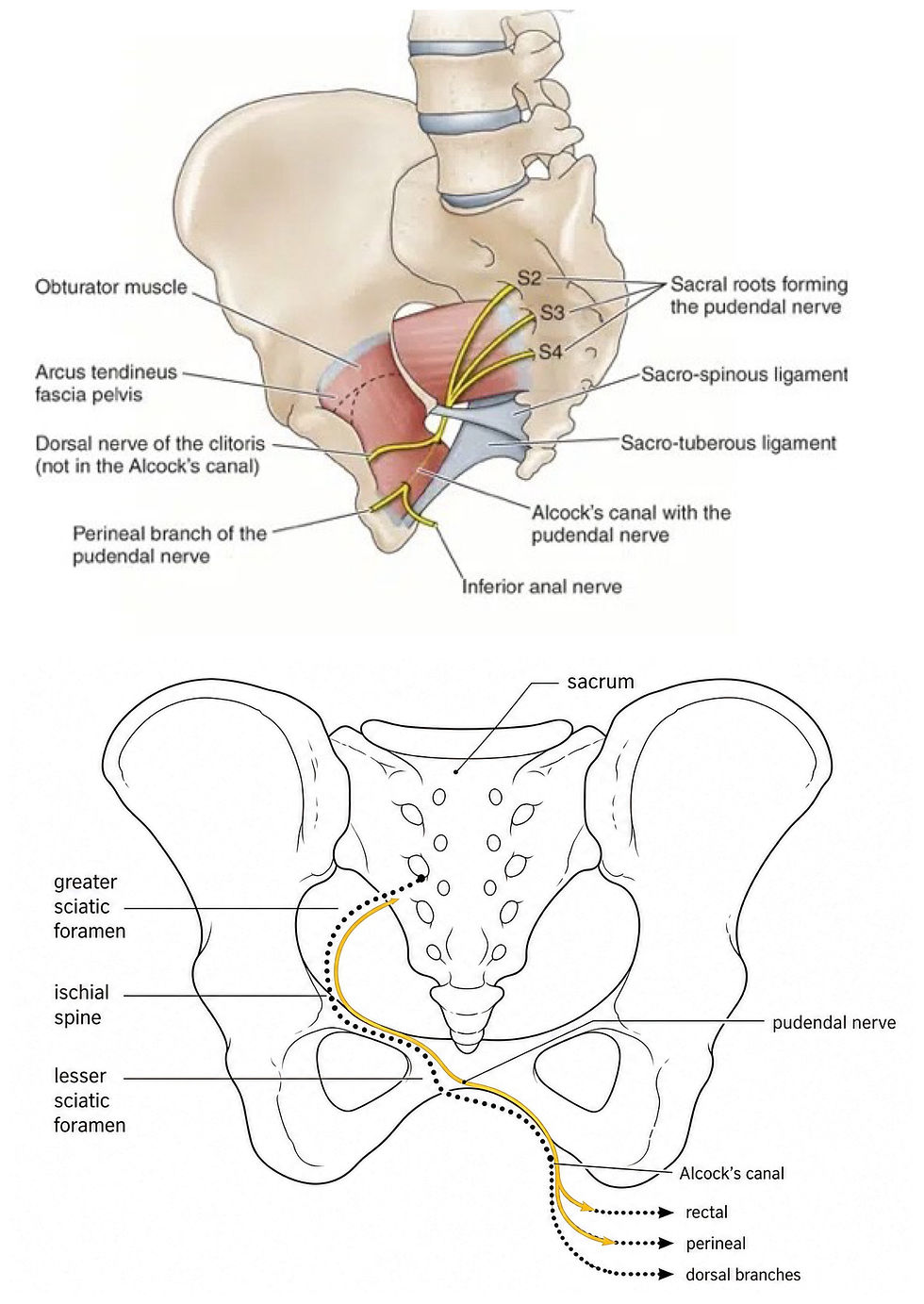
PIT may support conditions involving pelvic nerve irritation, including the pudendal nerve. Your pudendal nerve is a major player in pelvic health. It exits your spine, takes a sharp turn around a bony landmark called the ischial spine, and branches to control:
Pelvic floor muscle tone & coordination
Bladder + bowel function
Sexual sensation + function
Pelvic pain signals
Patients seek PIT as part of a comprehensive plan for:
Chronic pelvic pain + tension
Dysmenorrhea (painful periods)
Support during Infertility Journeys
Bladder leakage or Urinary incontinence
Constipation related to pelvic floor tension
Benign prostatic hyperplasia (BPH)
Varicocele
Chronic Pain After Injury or Trauma

Many people experience lingering pain long after an injury has “healed.”
This is common with:
Whiplash injuries
Repetitive strain injuries
Falls or motor vehicle accidents
Post-surgical pain
In these cases, the nervous system may remain sensitized, and tissues may stay guarded.
PIT helps interrupt these persistent pain loops by calming nerve signaling and restoring healthy movement and circulation.
How Point Injection Therapy with Acupuncture Can Help Scar Tissue
Scar tissue can form after surgeries, injuries, inflammation, or trauma, often leading to tightness, discomfort, reduced mobility, or lingering pain. In Traditional Chinese Medicine, areas of scarring are believed to disrupt the healthy flow of circulation & healing within the body.

Point Injection Therapy combined with TCM Acupuncture can help support scar remodeling by:
Promoting local circulation
Softening adhesions
Reducing inflammation
Encouraging the body’s natural healing response.
Treatment may also help decrease sensitivity, improve tissue mobility, and restore healthier function to the affected area. By addressing both the surface tissue & the deeper underlying imbalances, this integrative approach aims to support healing from the inside out.
Hormone Regulation & Reproductive Support
Healthy hormone function depends on clear nerve signaling and robust blood flow between the brain + reproductive organs.

PIT may support hormonal and reproductive health by:
Improving circulation to the uterus, ovaries, and pelvic tissues
Reducing pelvic congestion and tissue restriction
Calming stress-driven cortisol dominance
Supporting communication within the brain–hormone axis
Reducing inflammatory and stress patterns that interfere with ovulation, implantation, and cycle regularity
PIT vs. Steroid Injections: A Different Philosophy
Steroid injections are designed to suppress inflammation, which may temporarily reduce pain but can also:
Mask underlying dysfunction
Inhibit the body’s natural healing response
Contribute to connective tissue breakdown & increased joint instability with repeated use.
Point Injection Therapy is different.
Rather than shutting inflammation down, PIT:
Stimulates circulation
Resets dysfunctional nerve signaling
Encourages tissue repair
Supports longer-term healing
PIT is a therapeutic inflammatory treatment — meaning it works with the body’s innate healing processes.
Nervous System & Vagus Nerve Regulation

Many chronic conditions — including migraines, chronic pain, and pelvic dysfunction — involve a nervous system stuck in fight-or-flight.
Through strategic point selection, PIT helps:
Stimulate the Vagus nerve
Reducing sympathetic overdrive
Support rest-and-repair physiology
Improve emotional regulation, sleep, digestion, and pain processing
After-Care Instructions: Supporting the Healing Response
Because PIT is designed to activate and support the body’s natural healing processes, appropriate after-care is an important part of treatment success.

For 72 hours after treatment:
Prioritize relative rest + avoid overexertion
Apply moxa or a heated pad as directed to support circulation + healing response
Avoid initiating new physical activities, workouts, or strenuous exercise
Comfort Measures:
Moxa (Available in Clinic)
Arnica (Available in Clinic)
CBD/Pain creams (Available in Clinic)
Gentle movement, as recommended to support circulation & recovery
Medications:
Avoid anti-inflammatory medications (such as NSAIDs) unless specifically recommended by your provider, as they may interfere with the intended healing response stimulated by PIT
Normal Post-Treatment Responses:
The following reactions may occur and are generally temporary and expected
Mild soreness or tenderness at injection sites
Localized redness
Warmth in treated areas
A Whole-Person Approach
Point Injection Therapy recognizes that pain, pelvic health, hormones, fertility, migraines, musculoskeletal injuries, emotions, and the nervous system are deeply interconnected. By addressing trigger points, nerves, pelvic pathways, circulation, and stress patterns together, PIT offers a thoughtful, integrative approach — especially for conditions that have not fully resolved with conventional care alone.
Point Injection Therapy (PIT) Training Seminar- October 2026
Dr. Jessica will be part of an upcoming Point Injection Therapy (PIT) Training Seminar- October 2026, joining fellow instructors to help teach and share this powerful integrative treatment approach.
PIT combines modern injection techniques with acupuncture principles to support pain relief, healing, and improved function. It can be a valuable tool for addressing musculoskeletal pain, nerve irritation, and restoring balance in the body.
We are proud to see Dr. Jessica continuing to lead, educate, and help advance patient care within the Acupuncture community. Her passion for healing extends beyond the clinic & into teaching other practitioners.
If you’re an Acupuncture provider looking to expand your clinical skills, this is a wonderful opportunity to learn from experienced instructors.

Point Injection Therapy may help reduce pain, improve movement, and support recovery by stimulating the body’s natural healing response. Individual results vary, and treatment plans should be personalized after evaluation.
References
Hauser, R. A., Lackner, J. B., Steilen-Matias, D., & Harris, D. K. (2016). A systematic review of dextrose prolotherapy for chronic musculoskeletal pain.
Clinical Medicine Insights: Arthritis and Musculoskeletal Disorders, 9, 139–159.
DOI: 10.4137/CMAMD.S39160 | PMC: https://pmc.ncbi.nlm.nih.gov/articles/PMC5069923/
Allam H. Acupuncture and trigger point injection in the management of poststernotomy pain syndrome: A case series study. Explore (NY) 2020;16:161–164. doi: 10.1016/j.explore.2019.08.008. [DOI] [PubMed] [Google Scholar]
Liu, L., Huang, Q. M., Liu, Q. G., Ye, G., Bo, C. Z., Chen, M. J., & Li, P. (2018). Evidence for dry needling in the management of myofascial trigger points associated with neck and shoulder pain: A systematic review and meta-analysis.
Archives of Physical Medicine and Rehabilitation, 99(1), 144–152.
Roldan CJ, Osuagwu U, Cardenas-Turanzas M, Huh BK. Normal saline trigger point injections vs conventional active drug mix for myofascial pain syndromes. Am J Emerg Med. 2020;38:311–316. doi: 10.1016/j.ajem.2019.158410. [DOI] [PubMed] [Google Scholar]
Simons DG, Travell JG, Simons LS. Travell and Simons' myofascial pain and dysfunction: The trigger point manual. 12. Baltimore, MD: Williams & Wilkins; 1999. [Google Scholar]
Shin HJ, Shin JC, Kim WS, Chang WH, Lee SC. Application of ultrasound-guided trigger point injection for myofascial trigger points in the subscapularis and pectoralis muscles to post-mastectomy patients: A pilot study. Yonsei Med J. 2014;55:792–799. doi: 10.3349/ymj.2014.55.3.792. [DOI] [PMC free article] [PubMed] [Google Scholar]


